
Shopping for sunglasses usually starts in front of a mirror. Nothing wrong with that, and the frame you like is part of what makes you actually wear a pair instead of leaving it in the car.
The lenses do the real work, though, and plenty of pairs don’t do it well. Start with the UV label, then check the lens quality and the fit before you pay for a new pair of sunglasses. A few minutes of close inspection can spare you the squinting and headaches later.
Why Sunglasses Need 100% UV Protection
A dark tint and UV protection are 2 different features. Plenty of shoppers assume the first one means the second. Unfortunately, dark lenses without UV blocking can actually make things worse. Your pupils open wider behind them, which lets more ultraviolet light reach the inside of your eye.
Look for a label that reads 100% UV protection or UV400. Both tell you the lenses block ultraviolet light and not just visible brightness.
Years of sun exposure can contribute to cataracts and damage to the retina at the back of your eye. Reading the label takes 2 seconds.
How to Choose Sunglass Lens Colors
Tint affects how you see color and contrast, so match the lens to how you spend your time outdoors:
- Gray lenses cut brightness while keeping colors looking natural, which suits driving and everyday wear.
- Brown and amber lenses lift contrast, so they can help on a hiking trail or the golf course.
- Yellow lenses may sharpen what you see in low light, like an overcast morning.
- Green lenses sit somewhere in between, and a lot of people find them comfortable over long stretches outside.
A darker tint isn’t automatically better. If you drive at dusk fairly often, a lighter lens may serve you better than the darkest pair on the shelf.
Polarized Lenses and UV Protection Aren’t the Same Thing
Polarized lenses filter the harsh glare that bounces off water, wet pavement, and car hoods. Anyone who spends time near the ocean tends to notice the difference right away.
Polarization doesn’t block ultraviolet light, though. It’s a separate feature, and a pair can have one without the other, so look for both on the label. One quirk to expect: polarized lenses can make some LCD screens hard to read, including certain dashboard displays and gas pump keypads.
How Sunglasses Should Fit
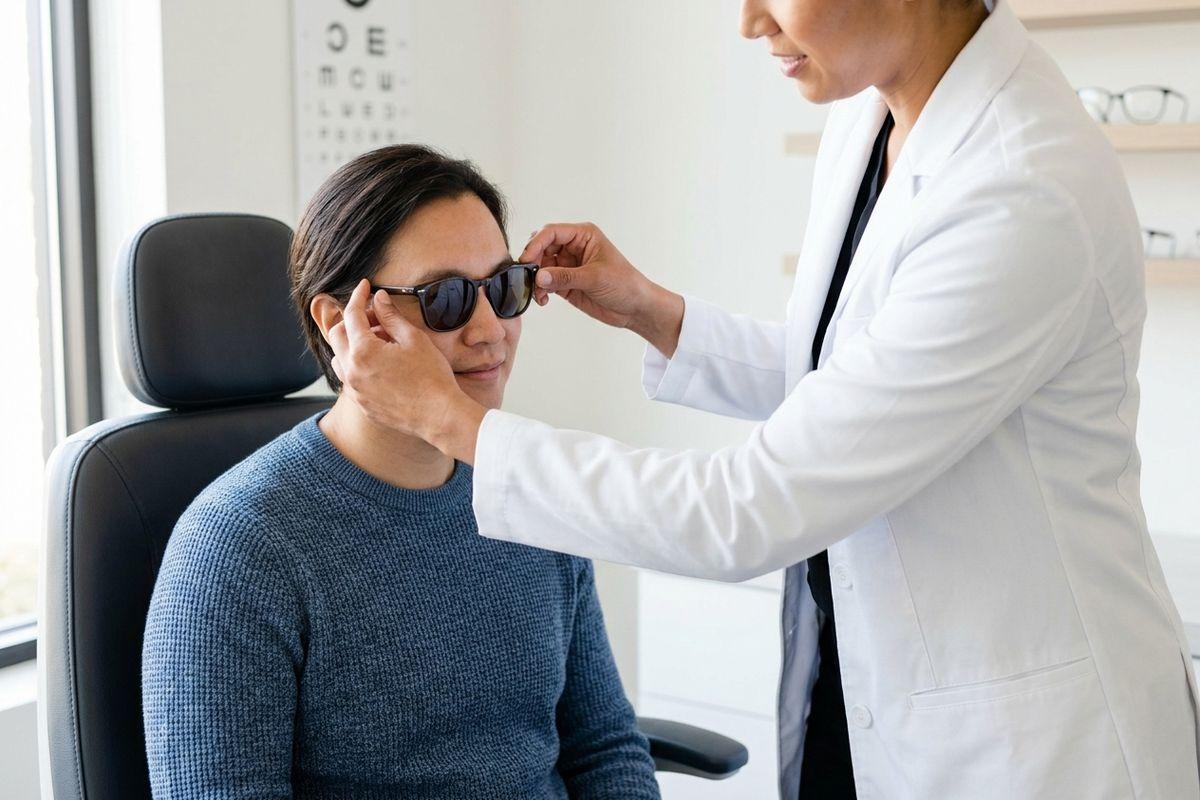
Sunglasses that slide down your nose or pinch behind your ears end up in a drawer. Frames should sit close to your face without squeezing your temples.
Check the lens width, the bridge that rests on your nose, and the arm length before you buy. Most frames can be adjusted, but a pair that’s badly sized to begin with won’t improve much.
Larger and wraparound styles block more light from the sides. Sunlight coming in around the edge of a frame is easy to overlook, especially on the water or anywhere with a lot of reflected glare.
Face shape can guide the rest. Angular frames often suit rounder faces, and softer curves tend to balance a square jaw. Try a few on and notice which pair you stop adjusting.
Why Cheap Sunglass Lenses Cause Problems
A low price often means the lens was an afterthought. Poorly made lenses can leave you with eyestrain and headaches after an hour outside, since your eyes keep working to correct what the lens distorts.
Test any pair before you commit. Hold them at arm’s length, look through them at a straight line like a door frame, and move the glasses slowly from side to side. Wavy or warped lines mean you should put them back.
Check the lens surface under good light, too. Even light scuffing can scatter light and make the view hazy.
What to Watch for When Buying Sunglasses Online
Online shopping can save you money, and there are plenty of legitimate sellers out there. Some listings aren’t what they seem. Watch for a few signs before you check out:
- Discounts far below the usual retail price, which often point to counterfeits.
- Missing or vague lens specifications, especially anything about UV protection.
- A return policy that’s hard to find or hard to use.
- Product photos that look like stock images rather than the item you’d receive.
- No contact information for the seller.
Counterfeit sunglasses tend to skip the UV coating and keep the dark tint. That’s the combination you want to avoid.
Pick a Pair You’ll Actually Wear
Good sunglasses can keep you comfortable outside and protect your eyes for years, and finding them mostly comes down to knowing what to look at before you buy.
Our team at Total Vision Seal Beach can help you compare lenses, sort out the fit, and find frames that work with your prescription. Book your appointment today and let’s find your next pair together!