

Key Takeaways
- Long screen sessions increase the risk of nearsightedness.
- Less blinking can lead to dry eye.
- Simple habits can help protect vision.
- Outdoor play helps eyes develop properly.
- A visit to an eye doctor helps catch problems early.
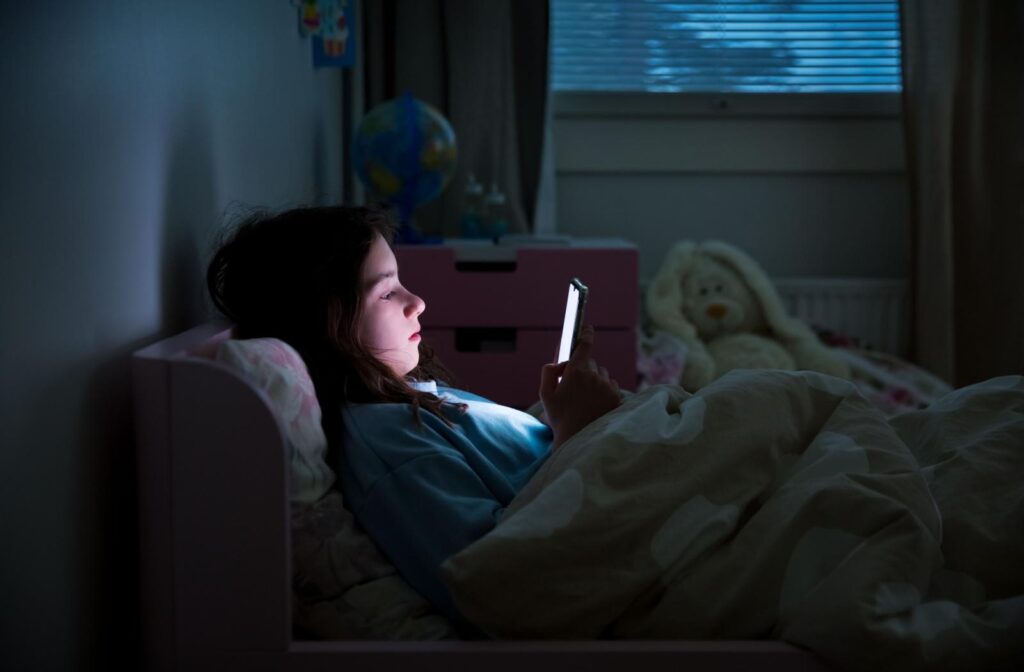
You may notice your child staring at a tablet or phone for hours every day. This daily habit brings quiet time for your busy household.
However, our team at Total Vision Seal Beach knows that this much time spent on digital devices impacts growing eyes. Screen time affects children’s eyesight by increasing the risk of nearsightedness (or myopia) and potentially leading to uncomfortable dry eyes.
How Digital Devices Impact Developing Vision
The Risk of Childhood Nearsightedness
When children spend hours focusing on screens held close to their faces, the continuous near-work places prolonged stress on their visual system, increasing the risk of developing or worsening myopia (nearsightedness).
This frequent indoor screen time often replaces outdoor play, depriving developing eyes of the natural sunlight essential for healthy ocular growth.
Children experiencing myopia typically struggle to see the chalkboard at school because distant objects appear blurry, and they may compensate by sitting closer to the television or holding devices unusually close. Establishing healthy screen boundaries early can help protect their long-term visual development.
Screen-Induced Dryness and Irritation
Blink rates naturally drop by as much as 50% when staring at glowing digital displays. Because blinking is essential for spreading a fresh layer of moisture across the eye, this reduced blinking causes the tear film to evaporate much faster, leading to dry, gritty, and uncomfortable eyes.
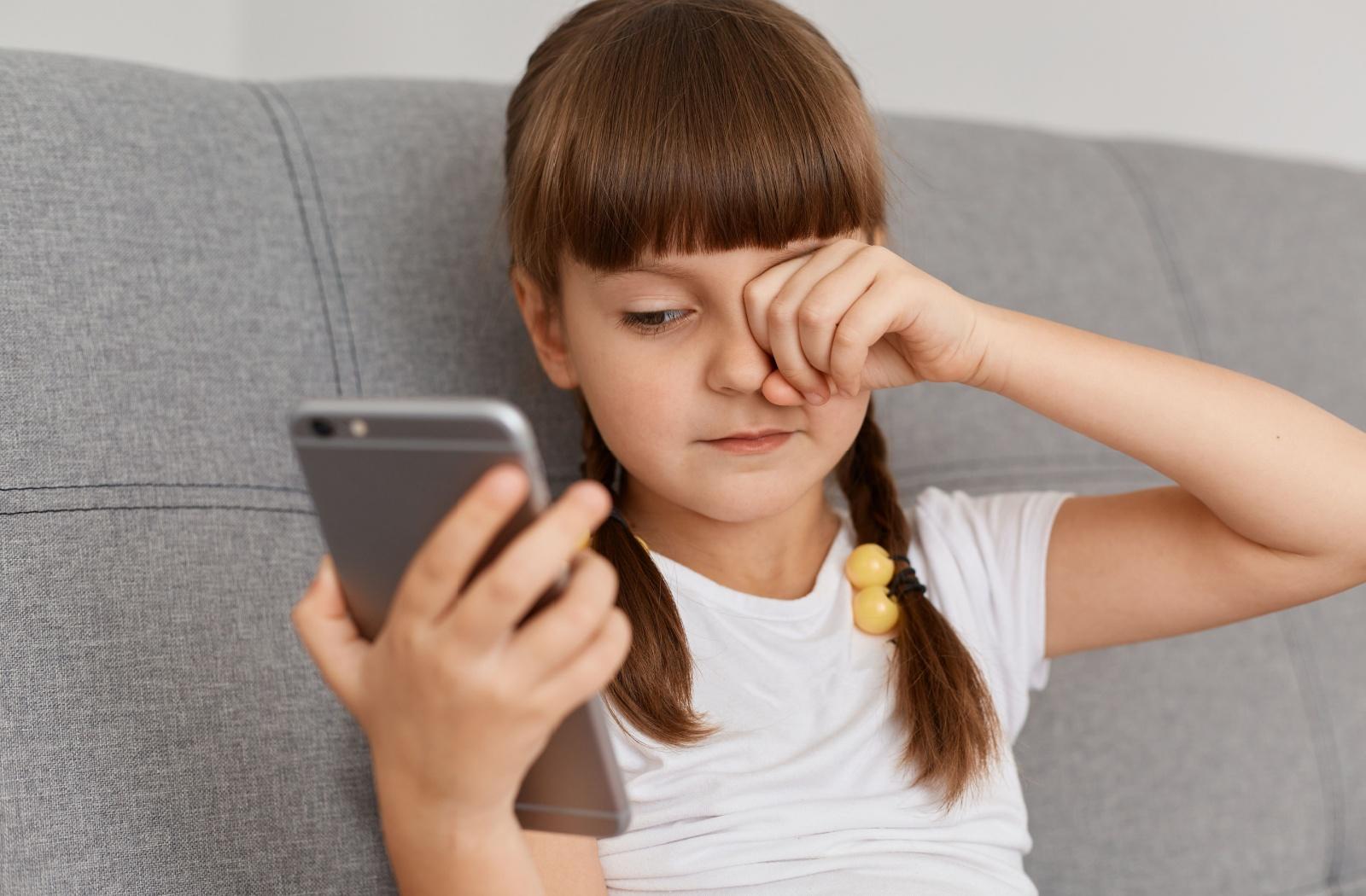
You may notice your child rubbing their eyes frequently during long device sessions as their tear film loses stability, or squinting in an effort to clear intermittent blurriness. Red, irritated eyes at the end of the day are a primary indicator that screen use is disrupting their natural blink patterns.
Physical Signs of Screen Strain in Children
Watch for these physical signs of visual strain after your child uses a device:
- Frequent headaches after tablet or computer use
- Complaints of scratchy or tired eyes
- Blurry vision when looking up from screens
These symptoms often happen after long car rides with a movie. They can also appear after a long afternoon of playing video games. A child complaining about a headache might just need a screen break to avoid computer vision syndrome.
Simple Rules for Healthy Screen Habits
The 20-20-20 Rule
You can teach your kids a fun trick to rest their eyes:
- Take a break every 20 minutes.
- Look at something 20 feet away.
- Rest your eyes for 20 full seconds.
This simple habit gives the focus muscles a needed break. Kids can use a simple digital timer to remember their breaks. Looking out a window works wonderfully for this exercise.
The Elbow Rule
Your child should keep screens at an elbow distance away from their face. Holding phones too close forces the eye muscles to work much harder. Good posture also matters for visual comfort.
Sitting up straight helps reduce neck and eye strain while reading. You can encourage them to use a stand for their tablet to keep it at a good distance. This prevents them from hunching over a tiny screen.
The Connection Between Nature and Eye Health
Outdoor Play Benefits
Spending time in natural daylight is essential for healthy ocular development as your child grows, making it highly beneficial to aim for at least 2 hours of outdoor play each day. Engaging in outdoor activities naturally encourages children to focus on distant objects like trees, clouds, and open landscapes.
This shift to long-range vision allows the eyes’ focusing muscles to relax completely, counteracting the strain caused by prolonged screen time and close-up schoolwork. Whether it is a daily walk through the park or a bike ride around the neighborhood, regular outdoor activity provides the natural sunlight and visual variety necessary to help protect their long-term eyesight.
Better Sleep Rhythms
You can help your family sleep better by stopping screen use one hour before bed. Bright blue light from screens confuses natural sleep cycles. This makes falling asleep difficult for active kids.
Well-rested eyes feel much more comfortable the next day. You can swap digital devices for a printed book at bedtime. A dark room helps the body prepare for a restful night.
Proactive Care with an Eye Doctor in Seal Beach
An eye doctor in Seal Beach can help catch visual issues early on. Comprehensive exams check the overall health of the eye structure.
A thorough evaluation can spot issues before they impact schoolwork. Regular visits keep your child seeing clearly year after year. Our team uses modern diagnostic equipment to monitor eye development.
Personalized Care for Your Family
Your eye doctor can help you create healthy screen limits for your entire household. Our team at Total Vision Seal Beach can teach you simple tricks to reduce eye strain.
Book an appointment today to keep your family seeing clearly.