
So much of what your child learns comes through their eyes: reading a chalkboard, watching a demonstration, following words across a page. When something feels off with their vision, it can slow their progress in ways that are hard to spot from the outside.
Here’s the tricky part. Young kids don’t know their vision looks different from anyone else’s, so they rarely complain about blurry vision or eye strain. Your child should visit an optometrist between ages 3 and 5, one more before first grade, and then a checkup every year after that. Regular children’s eye exams give your optometrist the chance to spot problems early, before they turn into bigger ones.
How Often Should Your Child See an Optometrist?
Think of eye exams as checkpoints along your child’s growth, not something you only think about once a problem shows up.
Your child’s eye exam should fall between ages 3 and 5, right before school starts. Then comes a checkup before first grade, just as reading and writing pick up speed.
After that, book a visit every year to keep vision on track through elementary school and beyond.
What Changes by Age 10?
By age 10, kids often spend hours reading, writing, and looking at screens every day. Schedule regular exams so the optometrist can spot changes early, since vision can change quickly during these years.
If your child already wears glasses or contacts, plan on more frequent visits. Growing eyes update prescriptions often, and a quick exam keeps their lenses matched to what they actually need.
Screen time adds another layer at this age. Ask your optometrist about digital eye strain if your child rubs their eyes or complains of tired eyes after schoolwork or gaming.
Signs Your Child May Be Having Trouble Seeing
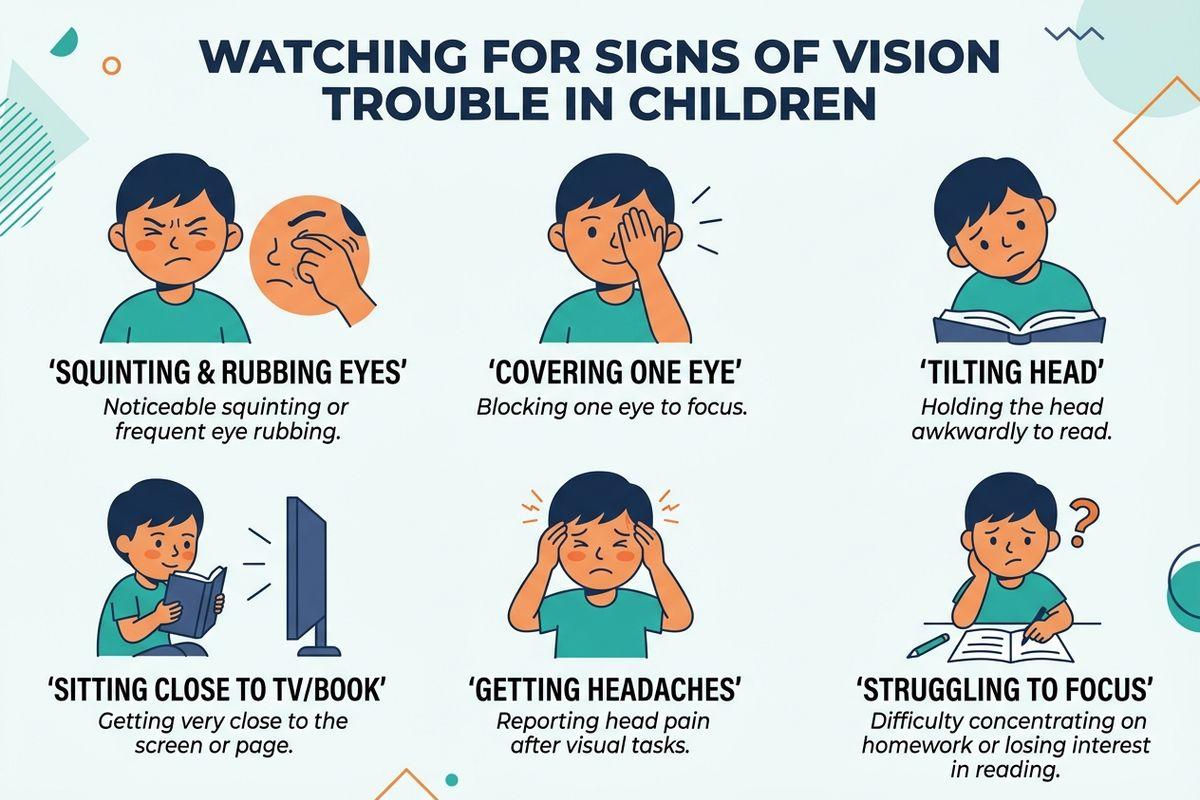
Between visits, pay attention to your child’s habits. They tell you a lot. Watch for these signs:
- Squinting, rubbing the eyes, or covering one eye to see
- Tilting the head to read
- Sitting close to the TV or a book
- Getting headaches
- Struggling to focus on homework
- Losing interest in reading
One or two of these on a tired day probably doesn’t mean much. But if a pattern keeps showing up, mention it to your optometrist.
Signs to Watch in Babies
Babies can’t tell you when something’s wrong, so keep a closer eye on them yourself. Look for a white spot in the pupil or an eye that turns in or out. Both can point to something worth a closer look.
Extra tearing and strong sensitivity to light are worth noting too. If you see either one, book a visit and let the optometrist take a look.
What Happens During Your Child’s Eye Exam
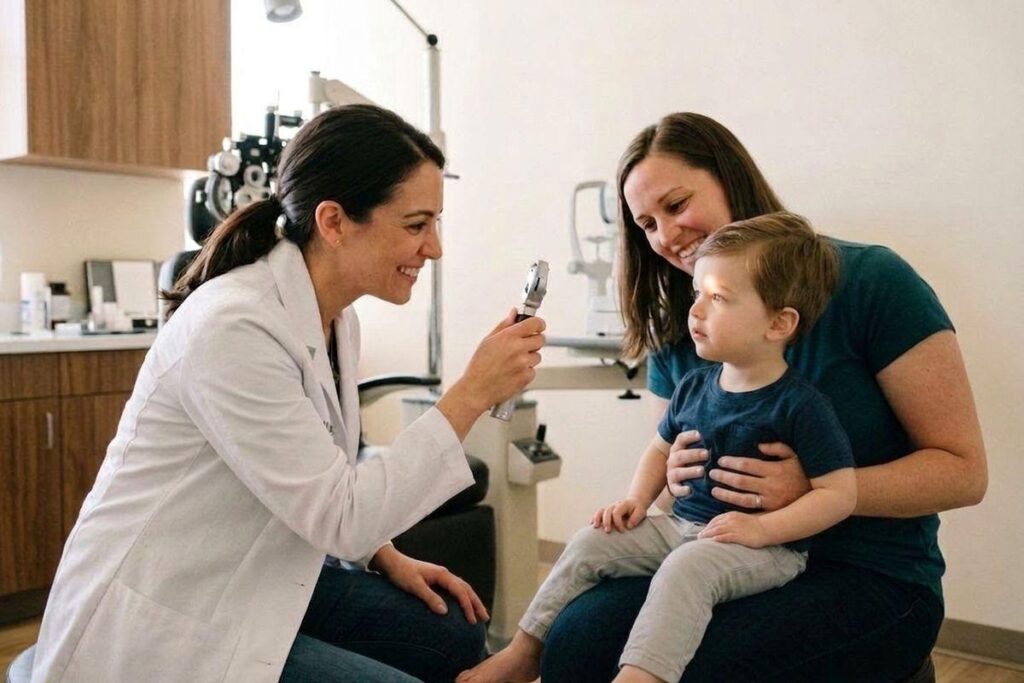
A child’s eye exam feels more like play than a test.
The optometrist checks how well your child’s eyes focus, follow a moving object, and work together as a team. Many parts of the exam use pictures, lights, and shapes instead of letters, so even toddlers can join in.
The exam also screens for lazy eye and crossed eyes, two conditions that respond well to early care. In some cases, the optometrist uses dilation drops to widen the pupils and get a clear view inside the eye, where a standard exam can’t reach.
Screening vs. Comprehensive Exam
A school screening moves fast and flags obvious problems, like trouble reading letters across a room. It helps, but it skips a lot.
A comprehensive exam goes further. It checks overall eye health, tests how well the eyes work together, and looks for nearsightedness, farsightedness, and astigmatism, none of which a basic screening is set up to find.
Think of a screening as a quick check-in and a comprehensive exam as the full picture. One doesn’t replace the other.
Small Habits That Help Between Visits
Support your child’s eyes at home with a few simple habits.
Try the 20-20-20 rule during screen time: every 20 minutes, have your child look at something 20 feet away for 20 seconds. It gives tired eyes a quick break.
Keep an eye out for the signs above so you can act early. And when the optometrist shares tips for home, put them into practice.
Give Your Child’s Eyes a Strong Start
Kids only get one set of eyes, and regular exams help keep them healthy through every stage of growing up. Consistent checkups also give you and your child’s optometrist a running history to compare against, so any change stands out sooner rather than later.
The team at Total Vision Seal Beach would love to be part of your child’s care.
Book an exam today and give your child’s eyes the attention they deserve.