


From signing your name to catching a set of keys tossed your way, you perform countless actions every day without a second thought. These tasks seem simple, but they involve a complex and rapid-fire connection between what you see and how you react.
This teamwork between your eyes and your body involves visual motor skills. Visual motor skills are how your brain, eyes, and hands coordinate to perform actions based on visual information. They’re an important part of how you interact with the world.
If you’re experiencing vision issues, don’t hesitate to schedule a comprehensive eye exam.
How Your Eyes & Hands Work Together
Visual motor integration is a part of almost everything you do. It guides your hand as you pour your morning coffee and helps you navigate your car through traffic. In fact, your visual motor skills are fundamental to your interactions with the world, supporting you from your earliest years through every stage of adulthood.
Visual Motor vs Fine Motor Skills
People sometimes use these terms interchangeably, but they describe different abilities. Fine motor skills involve the use of small muscles in your hands and fingers, like when you pick up a coin. Visual motor skills involve using your vision to direct those small muscle movements.
Examples of Visual Motor Skills in Action
You use these skills constantly in everyday situations. They’re so integrated into your life that you may not even notice them. Here are a few examples:
- Writing your name or drawing a picture
- Catching or throwing a ball
- Buttoning a shirt or tying your shoes
- Using a fork & knife to eat
- Building with blocks or completing a puzzle
Visual Motor Development by Age
Just like other developmental abilities, visual motor skills grow and change over time. From a child learning to hold a crayon to an adult perfecting a golf swing, these skills are always at work. Supporting this development is a lifelong process.
Milestones for Young Children
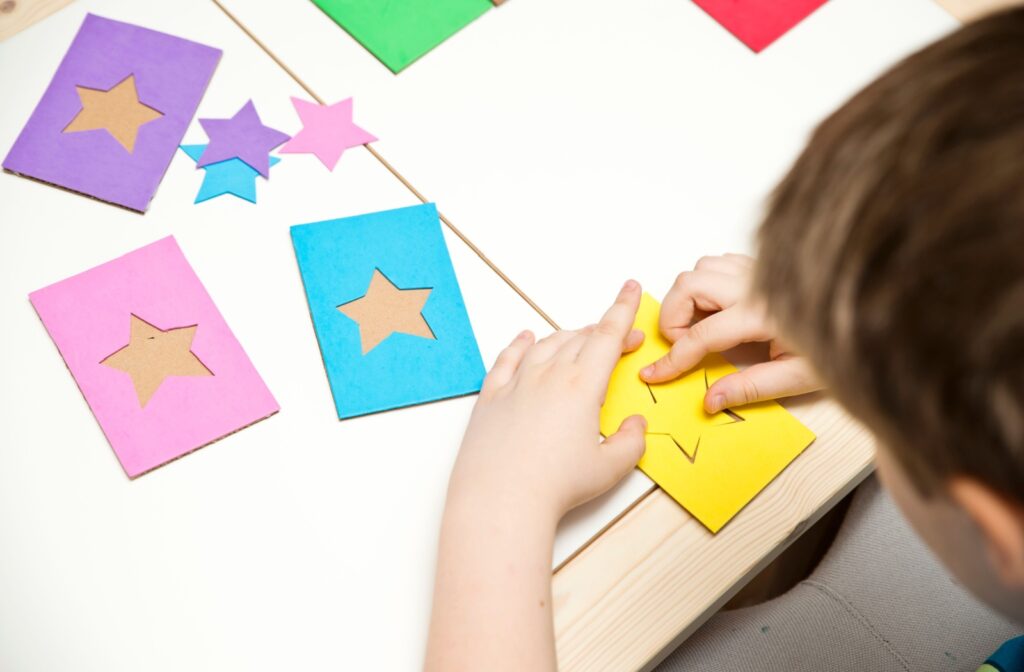
For young children, developing visual motor skills is a major part of learning and play. The development of infant vision sets the stage for these abilities. You can see this progression as children learn to stack blocks without them toppling over, as they learn to copy shapes, and as they learn to cut along a line with scissors.
Why These Skills Matter for Adults
As an adult, you rely on well-developed visual motor skills for countless daily tasks. This includes everything from typing an email on a keyboard to preparing a meal in the kitchen. Hobbies and sports—like painting, knitting, or tennis—also depend on precise hand-eye coordination.
Maintain Skills as a Senior
Maintaining strong visual motor skills is important for seniors, and proactive care through adult and senior eye exams can help. These skills can contribute to better balance and coordination, which supports independence in daily activities. They can help with everything from navigating stairs to writing a grocery list.
Signs of Visual Motor Challenges
Sometimes, the connection between vision and action isn’t as smooth as it could be. Recognizing when someone might be having difficulty can be the first step toward finding support.
What to Observe in Children
In children, challenges with visual motor integration can show up in schoolwork and at home. You may notice a child who:
- Has messy or slow handwriting
- Struggles to copy notes from a board
- Has a hard time with zippers, buttons, or shoelaces
- Seems clumsy, bumps into things often, or has issues with peripheral vision
- Avoids activities like drawing or puzzles
Difficulties for Adults & Seniors
Adults and seniors can also experience visual motor difficulties. These challenges can sometimes be subtle, but they can nonetheless affect daily routines. A few signs might include:
- Trouble judging distances while driving or parking, which could indicate that depth perception is off
- Difficulty with hobbies that require hand-eye coordination
- Frequent spills or drops things
- Challenges with balance or coordination
Related Factors & Conditions
Several factors can influence a person’s visual motor abilities. Here are some of the major ones:
Visual Motor Integration & ADHD
Sometimes, difficulties with visual motor integration can appear alongside other vision conditions, such as amblyopia (lazy eye), or attention-related conditions like ADHD. One doesn’t really cause the other, so addressing each challenge separately often provides the most effective support.
How Vision Affects Coordination
Clear and comfortable vision is the foundation for strong visual motor skills. If you’re experiencing blurry or cloudy vision, or if your eyes feel strained, this can affect how you perceive objects and guide your movements. Your ability to see clearly directly impacts your ability to act precisely.
How to Support Visual Motor Skills
The good news is that you can practice and strengthen your visual motor skills at any age. Engaging in simple, enjoyable activities is a great way to build the connection between your eyes and hands. It’s all about creating opportunities for fun and practice.
Fun Activities for Skill Practice
You can easily incorporate skill-building activities into your family’s routine. Many of these even feel more like play than practice. Some ideas include:
- Play catch with different sized balls to enhance skills supported by sports vision training
- Work on jigsaw puzzles together
- Use building blocks or LEGOs
- Practice drawing, painting, or coloring
- Try crafts that involve cutting & pasting
When a Vision Check Can Help
If you have concerns about a family member’s visual motor skills, a comprehensive eye exam is a good place to start. As your eye doctor in Seal Beach, we can assess the foundational visual skills needed for proper hand-eye coordination.
The connection between what you see and what you do is important for everyone in your family. From a child learning to write to a senior enjoying a favorite hobby, these skills support a lifetime of activity. Regular eye care is a proactive step in supporting your overall visual health and abilities.
At Total Vision Seal Beach, we are dedicated to helping our community see and live well. We invite you to schedule a visit with our team to discuss how we can support your family’s visual needs. We look forward to seeing you.