


You might notice your child struggles to finish homework, loses their place while reading, or has a short attention span for close-up work. Our team at Total Vision Seal Beach understands that while it’s easy to think it’s just a focus issue, it might be related to their vision.
Uncorrected vision problems in children can look like behavioral or attention difficulties. When a child can’t see clearly, the effort to make sense of a blurry world can lead to frustration and actions that are often misunderstood. The good news is that identifying these issues early with a children’s eye exam can make a difference.
The Surprising Link Between Your Child’s Eyes and Actions
What Can Look Like a Lack of Focus
When the world is blurry, paying attention can become difficult. A child with an undiagnosed vision issue may seem distracted when they are actually struggling to see clearly. This hidden problem, which can interfere with learning and comfort, can show up in several ways:
- Difficulty with classroom work
- Losing their place while reading
- A short attention span for close tasks
Vision Issues Can Cause Frustration
Imagine trying to read a book where all the letters are fuzzy: That would be frustrating for anyone. For a child, this constant effort can lead to emotional responses and behaviors that signal something is wrong. They may not have the words to explain that their vision is the problem, or they may not even realize their vision is blurry. Keep an eye out if your child:
- Avoids reading or homework
- Acts out or seems irritable
- Complains of headaches or tired eyes
Common Vision Problems That Affect Children
Nearsightedness and Farsightedness Explained
Refractive errors are common and simply mean the eye doesn’t bend light correctly, causing blurry vision. Nearsightedness and farsightedness are 2 of the most frequent types of vision issues found in children, each presenting a different challenge for your child’s sight.
- Nearsightedness (myopia): Vision is clear for close-up objects but blurry in the distance. This is a common condition that usually affects both eyes.
- Farsightedness (hyperopia): Vision is blurry for close-up tasks but clear at a distance.
The Challenge of Astigmatism
Astigmatism occurs when the front surface of the eye, or the lens inside, has an irregular curve, almost like a football instead of a sphere. This uneven shape distorts light as it enters the eye, so it can cause blurry vision both near and far.
How to Spot the Signs of a Vision Issue
Physical Clues to Watch For
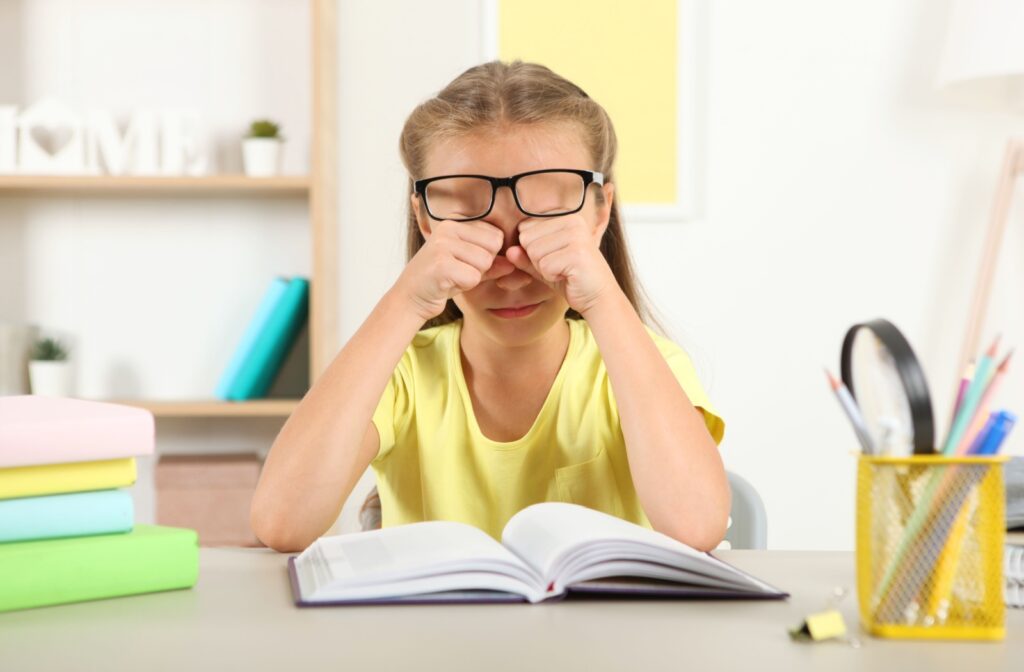
Sometimes, your child’s body language can give you clues about their vision. You might notice them adopting certain habits to see better without even realizing they’re doing so. Pay attention to these small but meaningful physical signs:
- Frequent eye rubbing or blinking
- Squinting or closing 1 eye, as squinting is a temporary attempt to see more clearly
- Tilting their head to see, which may be a sign of an eye alignment issue like strabismus
Behavioral Things to Watch for at School and Home
Changes in your child’s performance or daily habits can also point to a vision problem. Not keeping up with school, difficulty playing sports, or sitting too close to the television can be behaviors that result from difficulty seeing.
The Role of a Comprehensive Eye Exam
The Limits of School Screenings
A vision screening at school is a helpful starting point, but it’s different from a full eye exam. Screenings are designed to catch significant issues, which means they can overlook more subtle vision problems. An eye exam can provide a much more detailed picture of your child’s eye health.
What to Expect at Your Appointment
An eye exam is a straightforward process designed to be comfortable for children. Our team uses simple tests to evaluate everything from visual sharpness to how well the eyes work together. During the visit, you can expect simple activities like reading letters from a chart and a conversation with an eye doctor in Seal Beach about your child’s visual needs.
Support Your Child’s Vision and Success
Glasses for Comfort and Ease
For many children, glasses are a well-established and simple solution for correcting vision. Modern, stylish frames can be durable, helping kids feel comfortable while seeing the world clearly. They are easy to manage and can also offer a bit of protection from dust or debris.
Contact Lenses for an Active Lifestyle
If your child is involved in sports or other activities, contact lenses can be a great option. They provide an open field of view that can be helpful for athletics. Learning to use them properly can even help build responsibility and good hygiene habits.
Schedule Your Child’s Eye Exam
Clear vision can make a world of difference in your child’s ability to learn, play, and thrive. If you suspect a vision issue might be affecting your child’s behavior, our team at Total Vision Seal Beach can help you get the answers you need. Schedule an appointment to support your child’s visual health and overall well-being.